









How ABS Has Worked So Far This 2026 MLB Season
 Scott Morris | May 11, 2026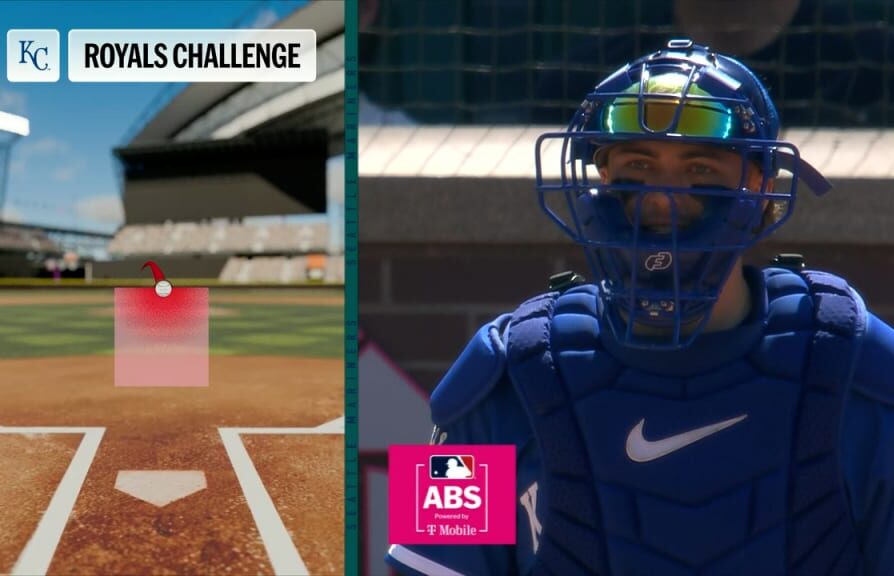
It might have been the most-talked about addition to Major League Baseball leading up to the 2026 season. It was not a player addition; it was the introduction of the Automated Ball-Strike system (ABS), or “robot umpire” for the 2026 MLB season.
So far, the ABS challenge system has worked as advertised. Roughly 53% of challenged calls have been overturned, indicating better accuracy while still maintaining the human element. Only 1 to 1.4 percent of all pitches are challenged with catchers being the most successful challengers thus far.
How does the ABS system work? Where did it come from and where do we go from here? We’ll answer all your questions and more below.
ABS Challenge System Rules
The MLB Automated Ball-Strike challenge system has worked pretty much as planned so far this season. About 53 percent of challenged calls are overturned, indicating better accuracy without removing the human element. Roughly 1-1.4 percent of pitches are challenged, with catchers being the most successful challengers (approx. 60% success rate) thus far.
How does the Challenge System work? MLB teams enter each game with two challenges. If a team wins a challenge, they retain it. If a challenge fails, it is lost and a team that fails twice is out of challenges for the rest of a game.
Should a game go to extra innings, one challenge is given to a team that enters the 10th inning without a challenge. If a team still has a challenge (or two) entering the 10th inning, those challenge(s) carry over. Teams will begin each extra inning with at least one challenge.
Challenges may only be instituted by pitchers, catchers, and hitters. A challenge must be initiated immediately – within a few seconds – after a ball or strike call. Players initiate a challenge by touching their cap or helmet. The typical ball-strike challenge takes an average of 15 seconds.
Origins of the ABS System
If you go back to 2006, 28 of the 30 MLB stadiums were equipped with something called Pitchf/x. By 2008, it was in all 30 MLB ballparks. Initially, Pitchf/x only provided information on all pitches. Teams had access to release points, movement, spin, speed, and location. Of course, the location information could be used to track balls and strikes and formed the foundation for what is now the ABS system.
By 2015, most stadiums had replaced Pitchf/x with something called TrackMan, which actually uses Doppler radar to gather all sorts of data not only from pitched balls, but also batted balls. TrackMan is part of the MLB Statcast technology that has been in place in all 30 MLB stadiums since 2015.
The Statcast technology was also put in numerous minor league stadiums and the ABS system was first used at the minor league level in the Atlantic League’s All-Star game in 2019. The Florida State League and the Arizona Fall League both got on board in 2021 and by 2022 there were five Triple-A stadiums using the technology.
By 2023, all Triple-A stadiums were using the ABS system with and without a challenge system. Triple-A is still using the ABS challenge system in 2026. At some point, minor league baseball as well as MLB will likely convert to the ABS system without a challenge.
ABS Trends
 Heading into MLB games on Monday, May 11, there had been 2,485 calls that were challenged. Of those, 1,317 were overturned, or roughly 53 percent. Remember, only pitchers, catchers, and hitters are allowed to call for a challenge.
So far, hitters have the worst success rate in challenging calls compared to pitchers and catchers. Catchers actually have the highest success rate, close to 60 percent. Will Smith of the Dodgers leads all MLB catchers with 34 challenges. His challenges were overturned 25 times for a success rate of 73.5 percent.
The Cubs Carson Kelly has the highest success rate of any catcher with at least 20 challenges. He’s been right 18 times for a success rate of 90 percent. Three catchers have success rates of 100 percent, but all three have five or fewer challenges.
Only three hitters have a perfect 100 percent challenge rate:
- Teoscar Hernandez (Dodgers): 4-for-4
- Isaac Paredes (Astros): 4-for-4
- Francisco Alvarez (Mets): 4-for-4
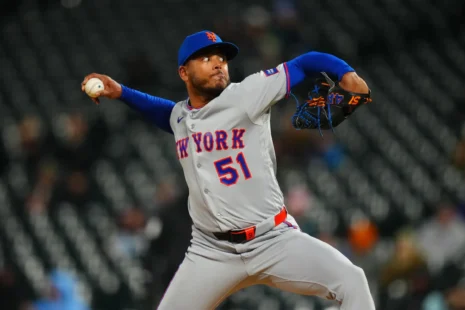
Pitchers are much less likely to challenge pitches, but Freddy Peralta and Chris Bassitt are both 2-for-2. Max Fried (2-for-3), Gregory Soto (0-for-3), and Cristopher Sanchez lead all pitchers with three challenges. Soto and Sanchez have had zero success.
The Detroit Tigers lead MLB with a 60.8 percent success rate in using the ABS challenge system. Arizona is close behind at 59.7 percent. The Washington Nationals have had the least amount of success in challenging calls, successful on only 40.8 percent of challenges.